
PYPL PE Ratio River
Browsing restrictions can be lifted for a fee.
Browsing restrictions can be lifted for a fee.
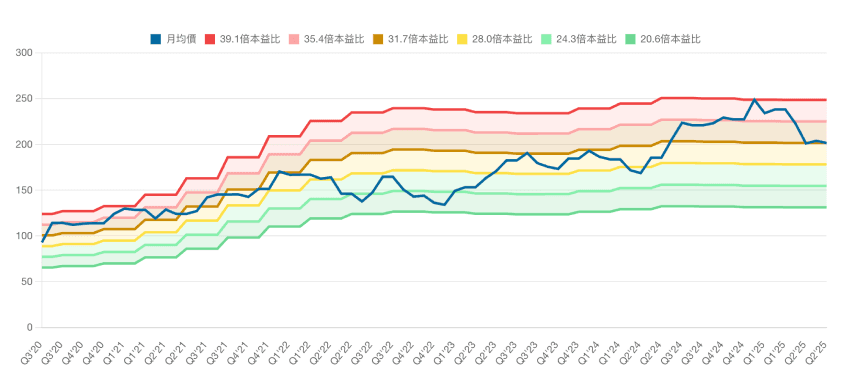
## PYPL PE Stream Chart Analysis **Current Valuation (Latest Data Point):** As of the most recent data point (mid-March 2026), PYPL's monthly average price stands at approximately **$44.59**, which falls **below** the PE_stream_1 boundary of **$42.72** — wait, at $44.59, the price is actually just **above** the 7.8x PE boundary ($42.72) but remains dramatically below all higher PE bands (21.5x at $117.29, 35.2x at $191.86, and beyond). This places PYPL squarely in the **"Undervalued" zone**, trading between the 7.8x and 21.5x PE interval, closer to the lower boundary. The stock is trading at an implied PE multiple just slightly above the lowest boundary of **7.8 times**, signaling that the market is pricing PYPL at historically depressed earnings multiples — a level that, by this framework, suggests significant potential undervaluation relative to its historical PE range. **Historical Trend Analysis:** PYPL's PE positioning has undergone a dramatic and prolonged contraction since early 2021. At the start of the observed period (early 2021), the stock traded between the **48.8x and 62.5x PE interval** — with monthly average prices near $238–$295, comfortably within the **"Overvalued"** to **"Warning"** zones. This reflected peak market enthusiasm for fintech growth stocks. From late 2021 through 2022, a sharp and sustained de-rating occurred: the stock collapsed from the Warning zone all the way through Fair, Watch, and into the Value zone, with prices dropping below $80 by mid-2022 — falling beneath the 21.5x PE boundary. Throughout 2023 and into 2024, PYPL continued to drift lower, eventually breaching the 7.8x PE boundary and entering the **"Undervalued"** zone around late 2023 to early 2024, where prices hovered in the $55–$65 range. A brief recovery in late 2024 and early 2025 pushed prices back toward $87–$88, temporarily lifting the stock back into the lower end of the **"Value"** zone (between 7.8x and 21.5x). However, this recovery proved short-lived — prices retreated again through early 2026, with the latest reading near $44.59, once again approaching the 7.8x boundary. Notably, the PE stream bands themselves have been gradually rising over time, reflecting modest earnings growth expectations, yet the stock price has failed to keep pace. The overall trend reflects a severe and persistent **valuation contraction** — from peak "Warning" levels above 62.5 times earnings to near the lowest "Undervalued" boundary of 7.8 times — underscoring deep market skepticism about PYPL's near-term growth prospects.