
ORCL PE Ratio River
Browsing restrictions can be lifted for a fee.
Browsing restrictions can be lifted for a fee.
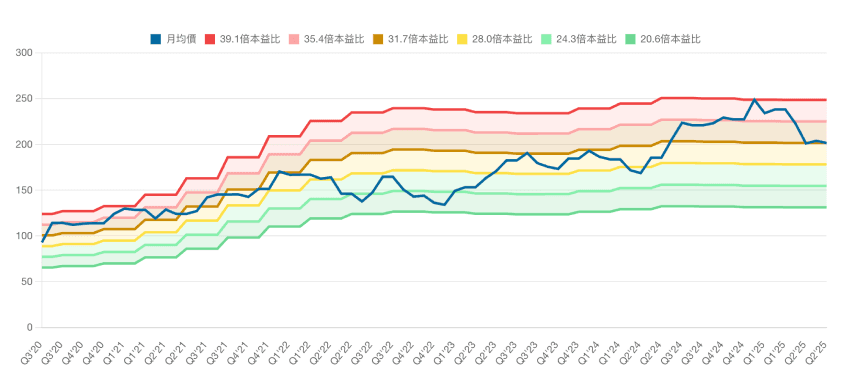
## ORCL PE Stream Chart Analysis **Current Valuation Positioning:** As of the latest data point (mid-March 2026), ORCL's monthly average price stands at approximately **$152.90**, which falls between the **13.8x PE boundary ($75.43)** and the **23.9x PE boundary ($130.60)**. More precisely, the stock is trading above the 23.9x boundary but below the **34.0x PE boundary ($185.77)**, placing it firmly in the **"Fair Value"** zone (between the 23.9x and 34.0x PE bands). This suggests the stock is currently trading at a moderate valuation relative to its historical PE range, neither deeply discounted nor significantly stretched, with meaningful headroom before reaching the 34.0x "Watch" threshold at $185.77. **Historical Valuation Trend:** Over the observed period from early 2021 through mid-March 2026, ORCL's valuation trajectory has been notably dynamic. In early 2021, the stock traded in the **"Undervalued"** to **"Value"** zone, with prices hovering around $57–$63, well below the 23.9x boundary. Through 2021 and into 2022, the stock gradually climbed into the **"Value"** zone but then retreated during the broad market correction of 2022, briefly dipping toward the lower PE bands. A significant re-rating began in mid-2023, as the stock surged past the 23.9x boundary into the **"Fair Value"** zone, driven by strong earnings momentum. The most dramatic valuation expansion occurred between mid-2024 and late 2025, when ORCL's price surged from approximately $131 to a peak near **$285**, briefly piercing the **54.2x PE boundary ($240.35)** and approaching the **64.3x "Warning"** threshold — representing a period of significant overvaluation. Since that peak, the stock has undergone a meaningful correction, retreating from the **"Overvalued"/"Warning"** zone back into the **"Fair Value"** interval, reflecting a healthy valuation reset. The overall PE river trend has been **upward-sloping**, indicating consistent underlying earnings growth, making ORCL well-suited for PE stream analysis as a large-cap, stable-earnings enterprise.