Merus n.v.MRUS.US Overview
MRUS Overall Performance
MRUS AI Analysis & Strategy

Browsing restrictions can be lifted for a fee.
MRUS Key Information
MRUS Financial Forecast
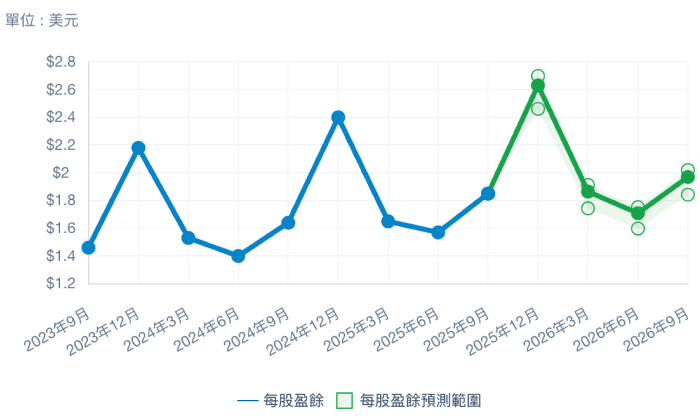
Browsing restrictions can be lifted for a fee.
| Quarterly | EPS Forecast | QoQ | Max | Min |
|---|---|---|---|---|
| 2025Q1 | ||||
| 2025Q2 | ||||
| 2025Q3 | ||||
| 2025Q4 | ||||
| 2026Q1 |
MRUS Earnings Table
Unit : USD
| QTR | Non-GAAP EPS | EPS YoY | EPS Surprise % | Sales | Sales YoY | Sales Surprise % | NPM |
|---|---|---|---|---|---|---|---|
| Current | |||||||
| 2024Q4 | |||||||
| 2024Q3 | |||||||
| 2024Q2 | |||||||
| 2024Q1 |
MRUS Profile
Merus N.V., a clinical-stage immuno-oncology company, engages in the discovery and development of bispecific antibody therapeutics in the Netherlands. Its bispecific antibody candidate pipeline includes Zenocutuzumab (MCLA-128), which is in a phase 2 clinical trials for the treatment of patients with metastatic breast cancer, as well as in Phase 1/2 clinical trials for the treatment of solid tumors that harbor Neuregulin 1. The company is also developing MCLA-158, which is in a phase I clinical trial for the treatment of solid tumors; MCLA-145, which is in phase 1 clinical trials for the treatment of solid tumors; MCLA-129, which is in phase 1/2 clinical trials for the treatment of patients with advanced non-small cell lung cancer and other solid tumors; and ONO-4685 that is Phase 1 clinical trial to treat relapsed/refractory T cell lymphoma. In addition, it has collaboration agreement with Betta Pharmaceuticals Co. Ltd for the research and development of stage bispecific antibody candidates include MCLA-129; and collaboration with Incyte Corporation for the development of MCLA-145. The company was incorporated in 2003 and is headquartered in Utrecht, the Netherlands.
Price of MRUS
MRUS FAQ
When is MRUS's latest earnings report released?
The most recent financial report for Merus n.v. (MRUS) covers the period of 2025Q3 and was published on 2025/09/30. This report is prepared according to IFRS/US GAAP standards and includes key financial indicators—Revenue, Profitability, Cash Flow, and Capital Structure. This information is essential for investors evaluating MRUS's short-term business performance and financial health. For the latest updates on MRUS's earnings releases, visit this page regularly.
What is the operating profit of MRUS?
According to the latest financial report, Merus n.v. (MRUS) reported an Operating Profit of -96.48M with an Operating Margin of -794.06% this period, representing a decline of 33.57% compared to the same period last year. Operating Profit reflects the company's core business efficiency and cost control, making it a key indicator for evaluating operational strength and profitability.
How is MRUS's revenue growth?
In the latest financial report, Merus n.v. (MRUS) announced revenue of 12.15M, with a Year-Over-Year growth rate of 3.21%. Revenue growth can be driven by product mix changes, market share expansion, price adjustments, or international market penetration. Investors should also monitor gross margin and regional revenue distribution for a comprehensive view of growth quality and sustainability.
How much debt does MRUS have?
As of the end of the reporting period, Merus n.v. (MRUS) had total debt of 12.32M, with a debt ratio of 0.01. Long-term debt comprises a higher/lower proportion. The level of financial leverage directly impacts the company's capital structure and interest coverage. If debt is high, pay attention to interest expenses and refinancing risks. Conversely, a low-leverage structure indicates greater risk tolerance but potentially less growth flexibility.
How much cash does MRUS have?
At the end of the period, Merus n.v. (MRUS) held Total Cash and Cash Equivalents of 367.49M, accounting for 0.41 of total assets. Both current and quick ratios indicate robust short-term debt repayment ability. High cash reserves typically mean the company has strong liquidity, supporting operational needs, expansion investments, or shareholder returns.
Does MRUS go with three margins increasing?
In the latest report, Merus n.v. (MRUS) did not achieve the “three margins increasing” benchmark, with a gross margin of 100%%, operating margin of -794.06%%, and net margin of -786.2%%. This demonstrates limited improvement in profitability, which is a key signal for fundamental analysis. Investors should consider margin trends alongside other financial indicators to assess MRUS's profit trajectory and future growth potential.
Is MRUS's EPS continuing to grow?
According to the past four quarterly reports, Merus n.v. (MRUS)'s earnings per share (EPS) shows a steady growth trend, with the latest EPS at -1.26. If EPS continues to rise due to revenue growth and cost optimization, it can support P/E valuation recovery and attract long-term investors.
What is the FCF of MRUS?
Merus n.v. (MRUS)'s Free Cash Flow (FCF) for the period is -85.25M, calculated as Operating Cash Flow minus Capital Expenditures, representing a fall of 5.85% compared with the previous period. Positive FCF growth provides stable funding for dividends, debt repayment, or strategic acquisitions, and is an important measure of true profitability and shareholder return potential.
What are the PEG ratio and PE ratio of MRUS?
The latest valuation data shows Merus n.v. (MRUS) has a Price-To-Earnings (PE) ratio of -18.88 and a Price/Earnings-To-Growth (PEG) ratio of 0.43. A PEG below 1 usually suggests the market is underestimating growth potential, while a PEG above 1 indicates high growth expectations are already priced in. Investors should conduct a comprehensive valuation by considering historical growth, market forecasts, and industry cycles.