Middlefield banc corp.MBCN.US Overview
US StockFinancial Services
(No presentation for MBCN)

Browsing restrictions can be lifted for a fee.
-
Middlefield banc corp.
1.79%
Avg of Sector
-0.31%
S&P500
Browsing restrictions can be lifted for a fee.
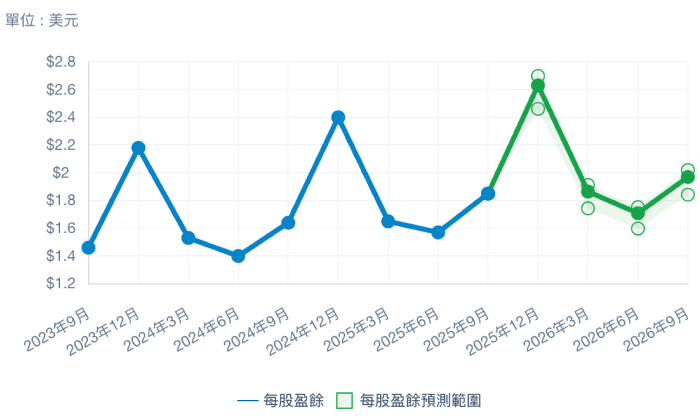
| Quarterly | EPS Forecast | QoQ | Max | Min |
|---|---|---|---|---|
| 2026Q1 | ||||
| 2026Q2 | ||||
| 2026Q3 | ||||
| 2026Q4 | ||||
| 2027Q1 |
Middlefield Banc Corp. operates as the bank holding company for The Middlefield Banking Company that provides various commercial banking services to small and medium-sized businesses, professionals, small business owners, and retail customers in northeastern and central Ohio. It provides checking, savings, negotiable order of withdrawal accounts, money market accounts, time certificates of deposit, commercial loans, real estate loans, various consumer loans, safe deposit facilities, and travelers' checks. The company also offers operational and working capital, term business, residential construction, professional, and residential and mortgage loans, as well as consumer installment loans for home improvements, automobiles, boats, and other personal expenditures; loans to finance capital purchases; selected guaranteed or subsidized loan programs for small businesses; and agricultural loans. Further, it provides official checks, money orders, ATM services, as well as IRA accounts; online banking and bill payment services to individuals; and online cash management services to business customers. In addition, the company resolves and disposes troubled assets in Ohio. As of December 31, 2021, it has 17 banking centers in Chardon, Newbury, and Middlefield, Garrettsville, Mantua, Orwell, Cortland, Dublin, Westerville, Sunbury, Powell, Beachwood, Solon, Twinsburg, and Plain City; as well as an administrative office in Middlefield, and a loan production office in Mentor. Middlefield Banc Corp. was founded in 1901 and is headquartered in Middlefield, Ohio.
Unit : USD
| QTR | Non-GAAP EPS | EPS YoY | EPS Surprise % | Sales | Sales YoY | Sales Surprise % | NPM |
|---|---|---|---|---|---|---|---|
| Current | |||||||
| 2025Q4 | |||||||
| 2025Q3 | |||||||
| 2025Q2 | |||||||
| 2025Q1 |
The most recent financial report for Middlefield banc corp. (MBCN) covers the period of 2025Q4 and was published on 2025/12/31. This report is prepared according to IFRS/US GAAP standards and includes key financial indicators—Revenue, Profitability, Cash Flow, and Capital Structure. This information is essential for investors evaluating MBCN's short-term business performance and financial health. For the latest updates on MBCN's earnings releases, visit this page regularly.
According to historical valuation range analysis, Middlefield banc corp. (MBCN)'s current price-to-earnings (P/E) ratio is 22.42, placing it in the Watch zone on the P/E River chart. This level indicates that the market's expectations for future earnings are already reflected in the share price, with the valuation currently leaning optimistic. Investors are advised to further examine the company's fundamentals and its position in the industry cycle to validate whether the valuation is justified.
According to the latest financial report, Middlefield banc corp. (MBCN) reported an Operating Profit of 3.96M with an Operating Margin of 16.05% this period, representing a decline of 32.3% compared to the same period last year. Operating Profit reflects the company's core business efficiency and cost control, making it a key indicator for evaluating operational strength and profitability.
In the latest financial report, Middlefield banc corp. (MBCN) announced revenue of 24.65M, with a Year-Over-Year growth rate of 39.68%. Revenue growth can be driven by product mix changes, market share expansion, price adjustments, or international market penetration. Investors should also monitor gross margin and regional revenue distribution for a comprehensive view of growth quality and sustainability.
As of the end of the reporting period, Middlefield banc corp. (MBCN) had total debt of 186.45M, with a debt ratio of 0.1. Short-term debt comprises a higher/lower proportion. The level of financial leverage directly impacts the company's capital structure and interest coverage. If debt is high, pay attention to interest expenses and refinancing risks. Conversely, a low-leverage structure indicates greater risk tolerance but potentially less growth flexibility.
At the end of the period, Middlefield banc corp. (MBCN) held Total Cash and Cash Equivalents of 47.51M, accounting for 0.02 of total assets. Both current and quick ratios indicate robust short-term debt repayment ability. High cash reserves typically mean the company has strong liquidity, supporting operational needs, expansion investments, or shareholder returns.
In the latest report, Middlefield banc corp. (MBCN) achieved the “three margins increasing” benchmark, with a gross margin of 62.85%%, operating margin of 16.05%%, and net margin of 12.64%%. This demonstrates improvement in profitability, which is a key signal for fundamental analysis. Investors should consider margin trends alongside other financial indicators to assess MBCN's profit trajectory and future growth potential.
According to the past four quarterly reports, Middlefield banc corp. (MBCN)'s earnings per share (EPS) shows a declining trend, with the latest EPS at 0.39. If EPS continues to rise due to revenue growth and cost optimization, it can support P/E valuation recovery and attract long-term investors.
Middlefield banc corp. (MBCN)'s Free Cash Flow (FCF) for the period is 0, calculated as Operating Cash Flow minus Capital Expenditures, representing a fall of 100% compared with the previous period. Positive FCF growth provides stable funding for dividends, debt repayment, or strategic acquisitions, and is an important measure of true profitability and shareholder return potential.
The latest valuation data shows Middlefield banc corp. (MBCN) has a Price-To-Earnings (PE) ratio of 22.42 and a Price/Earnings-To-Growth (PEG) ratio of -0.55. A PEG below 1 usually suggests the market is underestimating growth potential, while a PEG above 1 indicates high growth expectations are already priced in. Investors should conduct a comprehensive valuation by considering historical growth, market forecasts, and industry cycles.