Great lakes dredge & dock corporationGLDD.US Overview
US StockIndustrials
(No presentation for GLDD)

Browsing restrictions can be lifted for a fee.
-0.03%
Great lakes dredge & dock corporation
0.28%
Avg of Sector
-0.31%
S&P500
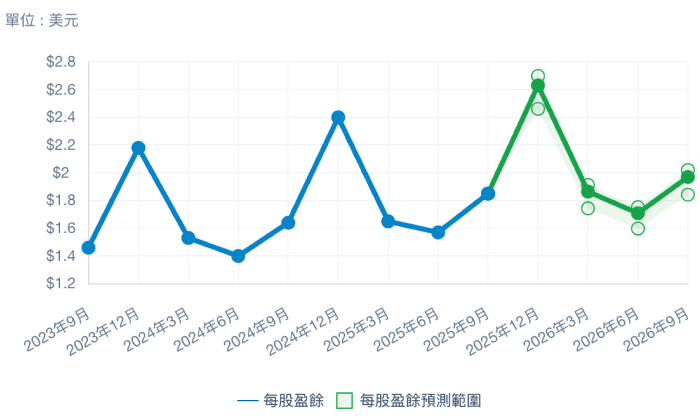
Browsing restrictions can be lifted for a fee.
| Quarterly | EPS Forecast | QoQ | Max | Min |
|---|---|---|---|---|
| 2026Q1 | ||||
| 2026Q2 | ||||
| 2026Q3 | ||||
| 2026Q4 | ||||
| 2027Q1 |
Great Lakes Dredge & Dock Corporation provides dredging services in the United States. The company engages in capital dredging that consists of port expansion projects; coastal restoration and land reclamations; trench digging for pipelines, tunnels, and cables; and other dredging related to the construction of breakwaters, jetties, canals, and other marine structures. It is also involved in coastal protection projects that comprises of moving sand from the ocean floor to shoreline locations where erosion threatens shoreline assets; maintenance dredging, which consists of the re-dredging of previously deepened waterways and harbors to remove silt, sand, and other accumulated sediments; land reclamations, channel deepening, and port infrastructure development; and lake and river dredging, inland levee and construction dredging, environmental restoration and habitat improvement, and other marine construction projects. The company serves federal, state, and local governments; foreign governments; and domestic and foreign private concerns, such as utilities, oil, and other energy companies. It operates a fleet of 18 dredges, 17 material transportation barges, 1 drillboat, and various other support vessels. The company was formerly known as Lydon & Drews Partnership and changed its name to Great Lakes Dredge & Dock Corporation in 1905. Great Lakes Dredge & Dock Corporation was founded in 1890 and is headquartered in Houston, Texas.
Unit : USD
| QTR | Non-GAAP EPS | EPS YoY | EPS Surprise % | Sales | Sales YoY | Sales Surprise % | NPM |
|---|---|---|---|---|---|---|---|
| Current | |||||||
| 2025Q4 | |||||||
| 2025Q3 | |||||||
| 2025Q2 | |||||||
| 2025Q1 |
The most recent financial report for Great lakes dredge & dock corporation (GLDD) covers the period of 2025Q4 and was published on 2025/12/31. This report is prepared according to IFRS/US GAAP standards and includes key financial indicators—Revenue, Profitability, Cash Flow, and Capital Structure. This information is essential for investors evaluating GLDD's short-term business performance and financial health. For the latest updates on GLDD's earnings releases, visit this page regularly.
According to historical valuation range analysis, Great lakes dredge & dock corporation (GLDD)'s current price-to-earnings (P/E) ratio is 15.33, placing it in the Value zone on the P/E River chart. This level indicates that the market's expectations for future earnings are already reflected in the share price, with the valuation currently leaning conservative. Investors are advised to further examine the company's fundamentals and its position in the industry cycle to validate whether the valuation is justified.
According to the latest financial report, Great lakes dredge & dock corporation (GLDD) reported an Operating Profit of 32.61M with an Operating Margin of 12.72% this period, representing a growth of 20.57% compared to the same period last year. Operating Profit reflects the company's core business efficiency and cost control, making it a key indicator for evaluating operational strength and profitability.
In the latest financial report, Great lakes dredge & dock corporation (GLDD) announced revenue of 256.45M, with a Year-Over-Year growth rate of 26.47%. Revenue growth can be driven by product mix changes, market share expansion, price adjustments, or international market penetration. Investors should also monitor gross margin and regional revenue distribution for a comprehensive view of growth quality and sustainability.
As of the end of the reporting period, Great lakes dredge & dock corporation (GLDD) had total debt of 455.87M, with a debt ratio of 0.35. Long-term debt comprises a higher/lower proportion. The level of financial leverage directly impacts the company's capital structure and interest coverage. If debt is high, pay attention to interest expenses and refinancing risks. Conversely, a low-leverage structure indicates greater risk tolerance but potentially less growth flexibility.
At the end of the period, Great lakes dredge & dock corporation (GLDD) held Total Cash and Cash Equivalents of 13.36M, accounting for 0.01 of total assets. Both current and quick ratios indicate robust short-term debt repayment ability. High cash reserves typically mean the company has strong liquidity, supporting operational needs, expansion investments, or shareholder returns.
In the latest report, Great lakes dredge & dock corporation (GLDD) achieved the “three margins increasing” benchmark, with a gross margin of 20.9%%, operating margin of 12.72%%, and net margin of 4.9%%. This demonstrates improvement in profitability, which is a key signal for fundamental analysis. Investors should consider margin trends alongside other financial indicators to assess GLDD's profit trajectory and future growth potential.
According to the past four quarterly reports, Great lakes dredge & dock corporation (GLDD)'s earnings per share (EPS) shows a declining trend, with the latest EPS at 0.19. If EPS continues to rise due to revenue growth and cost optimization, it can support P/E valuation recovery and attract long-term investors.
Great lakes dredge & dock corporation (GLDD)'s Free Cash Flow (FCF) for the period is 50.36M, calculated as Operating Cash Flow minus Capital Expenditures, representing a rise of 239.84% compared with the previous period. Positive FCF growth provides stable funding for dividends, debt repayment, or strategic acquisitions, and is an important measure of true profitability and shareholder return potential.
The latest valuation data shows Great lakes dredge & dock corporation (GLDD) has a Price-To-Earnings (PE) ratio of 15.33 and a Price/Earnings-To-Growth (PEG) ratio of -0.52. A PEG below 1 usually suggests the market is underestimating growth potential, while a PEG above 1 indicates high growth expectations are already priced in. Investors should conduct a comprehensive valuation by considering historical growth, market forecasts, and industry cycles.